
Swiss CNC Machining Services
Small-diameter precision parts — pins, shafts, connectors. Guide-bushing support, single-setup turning, tight tolerances. Swiss screw machining services purpose-built for high-volume small turned parts.
Quick Answer
Swiss CNC machining turns small-diameter precision parts — pins, shafts, connectors — on a lathe whose guide bushing supports the bar millimeters from the cutting edge. Expect ±0.005 in (±0.13 mm) general tolerances, ±0.001 in (±0.025 mm) on precision diameters, one-setup features, and batch consistency from prototype to 100,000+ pieces.
Long, Slender, Small-Diameter Parts — Machined Straight
Swiss CNC machining exists for one geometric problem: parts that are too long and too thin for a conventional lathe. On a standard turning machine, a slender shaft deflects away from the cutting tool — you get taper, chatter, and out-of-tolerance diameters. A Swiss-type lathe solves this with a sliding headstock and a guide bushing that supports the bar stock millimeters from the cutting edge, so deflection simply has no room to happen.
IsoCNC machines Swiss-type precision parts for OEMs in North America and Europe: pins, shafts, connectors, and other small turned components that need tight diameters, fine threads, and repeatable quality across the batch.
What We Machine on Swiss Lathes
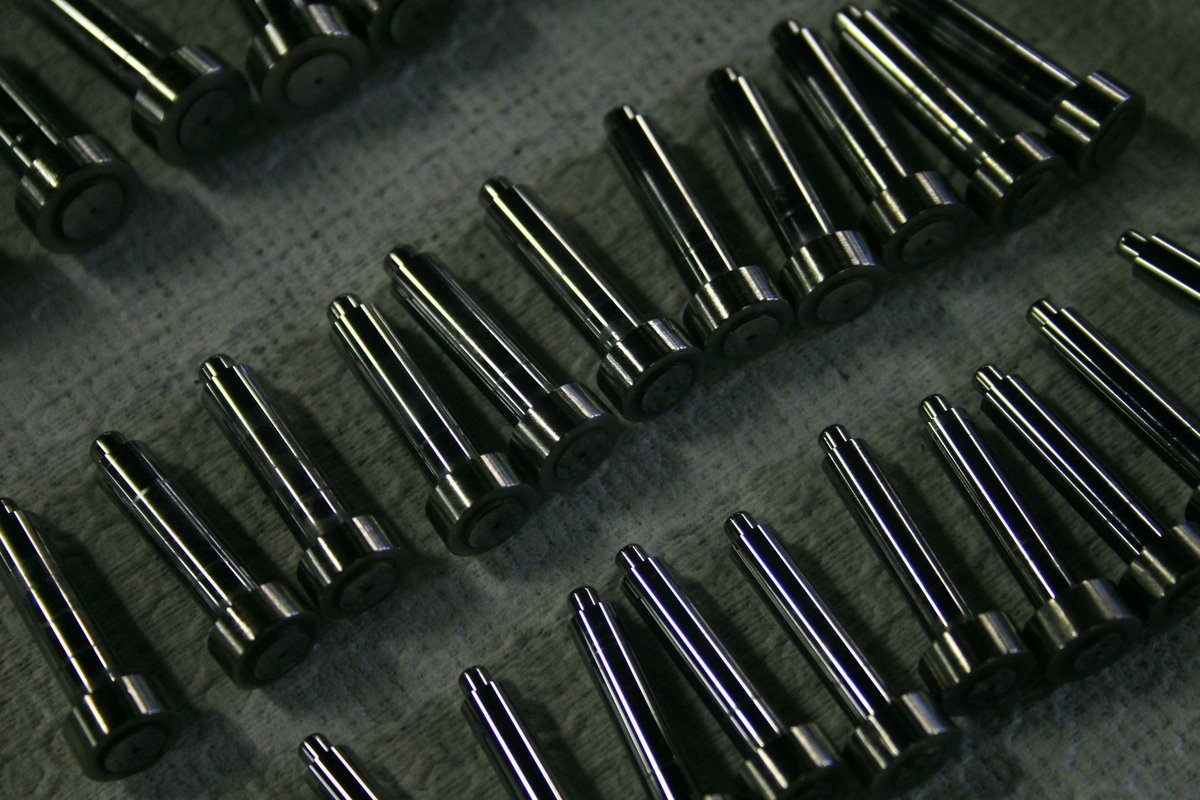
- Precision pins and dowels — tight OD tolerances, chamfers, grooves, and snap-ring features, in stainless, steel, brass, and titanium
- Slender shafts and axles — long length-to-diameter ratios held straight over the full length, with steps, threads, and cross-holes
- Connectors and contacts — brass and copper electrical components with knurls, threads, and small drilled features
- Threaded micro-components — fine metric and imperial threads, standoffs, and inserts
- Fittings and valve components — small hydraulic, pneumatic, and instrumentation parts with sealing surfaces
- Sensor and medical-style components — small stainless and titanium parts where surface finish and cleanliness matter
Why the Guide Bushing Matters
The defining feature of Swiss CNC machining is the guide bushing. Bar stock feeds through the bushing and only a short, supported section is exposed to the tool at any time. Three practical benefits follow:
- 1. Accuracy on slender parts. Diameters stay round and to size along the entire length — no taper, no chatter marks, even at 10:1 length-to-diameter ratios and beyond.
- 2. One-and-done setups. Turning, drilling, cross-drilling, threading, and milling happen in a single clamping as the bar feeds through. Features stay concentric because the part is never re-chucked.
- 3. Batch consistency. Bar-fed machines run continuously — part 500 comes off with the same setup as part 1, which is what you want when you order thousands of identical pins.
Swiss Machining Specifications
| Capability | Specification |
|---|---|
| Typical diameter range | 0.020–1.25 in (0.5–32 mm) bar |
| Length-to-diameter ratio | 10:1 and higher held straight with guide bushing support |
| General tolerance | ±0.005 in (±0.13 mm) |
| Precision diameters | ±0.001 in (±0.025 mm), quoted against drawing |
| Operations in one setup | Turning, drilling, cross-holes, threading, knurling, light milling |
| Threads | Fine metric, UNC/UNF, custom pitches to gauge |
| As-machined finish | Ra 1.6 µm (63 µin) typical on turned diameters |
| Batch range | Prototype quantities to 100,000+ pcs production runs |
Design Tips for Swiss-Machined Parts
A few drawing choices make Swiss screw machining faster and cheaper. Standardize on common bar sizes where the design allows — oversize stock just becomes chips you pay for twice. Combine features into one part where possible, because a single-setup machine rewards complexity that would otherwise take two or three operations across different machines. Specify corner breaks rather than tiny radii unless the radius is functional — it programs and measures faster. And if a slender part also needs milled flats or cross-features, say so up front: those run in the same clamping, not as a second setup.
Swiss Turning vs. Conventional CNC Turning
The drawing decides the process. Route parts to Swiss machining when they are small-diameter, slender, or need many features completed in one pass. Route them to conventional CNC turning when diameters are larger, lengths are short relative to diameter, or the part is chuck-held rather than bar-fed. For prismatic parts with some round features, CNC milling is usually the right primary process. If you're unsure which process fits, send the drawing — we'll route it to the machine that makes it cheapest and best.
Materials We Swiss-Machine
Stainless steel (303, 304, 316L), brass C360, copper, carbon and alloy steels (1215, 4140), aluminum (6061, 7075), titanium, and engineering plastics including PEEK and Delrin. Free-machining grades like 303 stainless and C360 brass run fastest and cheapest on Swiss machines — where the design allows, they're worth specifying. Full list on the materials page.
Quality on Small Parts
Small parts are easy to measure wrong. Critical diameters and threads are checked in process at defined intervals, and tight callouts are verified with calibrated micrometers, pin gauges, thread gauges, and optical measurement. First article inspection reports and material certificates are available with your shipment — see quality inspection and our tolerance standards.
Swiss CNC Machining FAQs
What is Swiss CNC machining?
A Swiss-type lathe feeds bar stock through a guide bushing that supports the work right at the cutting edge, so long, slender, small-diameter parts machine straight without taper or chatter. Turning, drilling, cross-drilling, threading, knurling, and light milling finish in one setup as the bar feeds through — pins, shafts, connectors, and similar small turned components.
What tolerances can Swiss screw machining hold?
General tolerance is ±0.005 in (±0.13 mm); precision diameters run to ±0.001 in (±0.025 mm), quoted against the drawing. Length-to-diameter ratios of 10:1 and higher hold straight with guide bushing support, and as-machined finish is typically Ra 1.6 µm (63 µin) on turned diameters.
When should I choose Swiss machining over conventional CNC turning?
Route parts to Swiss machining when they are small-diameter, slender, or need many features completed in one pass — bar from 0.020–1.25 in (0.5–32 mm). Choose conventional CNC turning for larger diameters, short lengths, or chuck-held parts. If you are unsure, send the drawing — we route it to the machine that makes it cheapest and best.
Start Your RFQ
Send STEP files and drawings. Pricing, lead time, and DFM feedback typically come back within 1–2 business days.
Get an Instant Quote →